
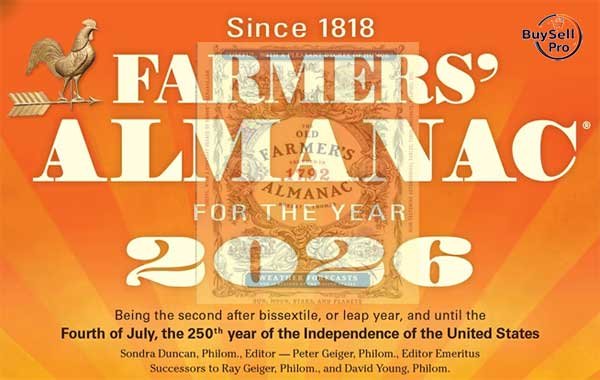

The farmers almanac has announced its final publication in 2026, marking the end of a beloved tradition. Furthermore, this decision affects millions of farmers and weather enthusiasts worldwide. Additionally, the announcement comes as a shock to those who have relied on the farmers almanac for generations. Meanwhile, many wonder what this means for agricultural weather forecasting. Consequently, we explore the complete story behind this historic decision.
Moreover, understanding the difference between various almanacs becomes crucial now. Similarly, the impact on farming communities requires careful examination. Therefore, this comprehensive guide covers everything you need to know about the farmers almanac ending.
What is the farmers almanac and Its Weather Prediction Legacy?
The farmers almanac represents a time-honored tradition in weather forecasting. Initially, it began as a simple guide for agricultural planning. Subsequently, it evolved into America’s most trusted weather prediction resource. Nevertheless, many people confuse it with the old farmer’s almanac.
Importantly, these publications serve different purposes despite similar names. Specifically, the farmers almanac focuses on long-range weather predictions. Conversely, the old farmer’s almanac continues its 234-year publication tradition. Additionally, both publications use unique forecasting methods and astronomical calculations.
Furthermore, the farmer almanac gained popularity through accurate seasonal predictions. Notably, farmers relied heavily on these forecasts for crop planning. Similarly, gardeners used almanac data for planting schedules. Therefore, the upcoming farmers almanac ending creates significant concern among agricultural communities.
Moreover, modern technology challenges traditional almanac methods. However, many still prefer almanac predictions over digital forecasts. Consequently, the decision to end publication reflects changing reader preferences and market dynamics.
Breaking News: farmers almanac 2026 Marks the Final Edition
Recently, publishers announced that farmers almanac 2026 will be the final edition. Specifically, declining readership and digital competition influenced this decision. Additionally, production costs have increased significantly over recent years. Therefore, continuing publication became financially unsustainable.
Furthermore, the announcement surprised longtime subscribers and agricultural professionals. Meanwhile, social media reactions show widespread disappointment among farming communities. Similarly, weather enthusiasts express concern about losing this trusted resource. Consequently, many are seeking alternative agricultural resources and tools for their farming needs.
Moreover, the publishers emphasized their gratitude to loyal readers. Additionally, they acknowledged the almanac’s important role in American agriculture. Nevertheless, market realities forced this difficult decision. Subsequently, the final farmers almanac 2026 edition will include special commemorative content.
Importantly, this decision affects various stakeholders differently. Specifically, older farmers who relied on printed almanacs face adjustment challenges. Conversely, younger farmers already use digital weather services. Therefore, the transition may be smoother for tech-savvy agricultural professionals.
The old farmer’s almanac: 234 Years and Still Going Strong
Remarkably, the old farmer’s almanac continues thriving despite industry challenges. Specifically, it maintains strong readership and digital presence. Additionally, this publication adapts successfully to modern reader preferences. Therefore, it demonstrates how traditional publications can survive digital transformation.
Furthermore, the old farmer’s almanac offers comprehensive content beyond weather predictions. Notably, it includes gardening tips, astronomical data, and seasonal recipes. Similarly, it provides historical weather patterns and climate insights. Consequently, readers find value in its diverse content offerings.
Moreover, the publication successfully embraces digital platforms while maintaining print editions. Additionally, it engages younger audiences through social media and mobile apps. Nevertheless, it preserves traditional forecasting methods and almanac charm. Therefore, the old farmer’s almanac serves as a model for publication longevity.
Importantly, this success contrasts sharply with the farmers almanac struggles. Specifically, different business strategies and content approaches explain these varying outcomes. Subsequently, industry observers study these differences to understand publication sustainability factors.
Impact on Agriculture and Modern Weather Forecasting Methods
Traditionally, farmers used almanacs for crucial agricultural decisions. Specifically, planting dates, harvest timing, and crop selection depended on almanac predictions. Additionally, livestock management and irrigation planning incorporated almanac data. Therefore, farmers almanac ending creates planning challenges for traditional farmers.
However, modern technology offers sophisticated alternatives to traditional almanacs. Specifically, satellite weather data provides more accurate short-term forecasts. Additionally, climate modeling improves long-range prediction accuracy. Nevertheless, some farmers prefer almanac simplicity over complex digital systems.
Furthermore, agricultural extension services now provide comprehensive weather resources. Similarly, smartphone apps deliver real-time weather updates and agricultural alerts. Consequently, farmers have multiple options for weather information access. Moreover, these digital tools often integrate with farm management software systems.
Additionally, the transition from almanacs to digital tools requires adaptation and learning. Specifically, older farmers may need training on new weather technologies. Meanwhile, younger farmers embrace digital solutions more readily. Therefore, agricultural communities must support this technological transition effectively.
Looking Forward: The Future Beyond farmers almanac
In conclusion, the farmers almanac ending represents significant change in agricultural weather forecasting. Specifically, it marks the transition from traditional to digital weather resources. Additionally, farmers must adapt to new prediction methods and technologies. Nevertheless, the almanac’s legacy will continue influencing agricultural practices.
Furthermore, farmers almanac 2026 will serve as a commemorative final edition. Moreover, collectors and historians will preserve these publications for future generations. Similarly, agricultural museums may display almanac collections as historical artifacts. Therefore, the almanac’s cultural impact extends beyond practical weather forecasting.
Finally, while the farmers almanac ends, weather prediction continues evolving. Specifically, artificial intelligence and machine learning improve forecast accuracy. Additionally, climate change research enhances long-term prediction capabilities. Consequently, farmers will benefit from increasingly sophisticated weather forecasting tools and resources.
For more information about agricultural tools and resources, visit the comprehensive old farmer’s almanac website which continues serving the farming community with reliable weather predictions and agricultural guidance.
